Alnus acuminata
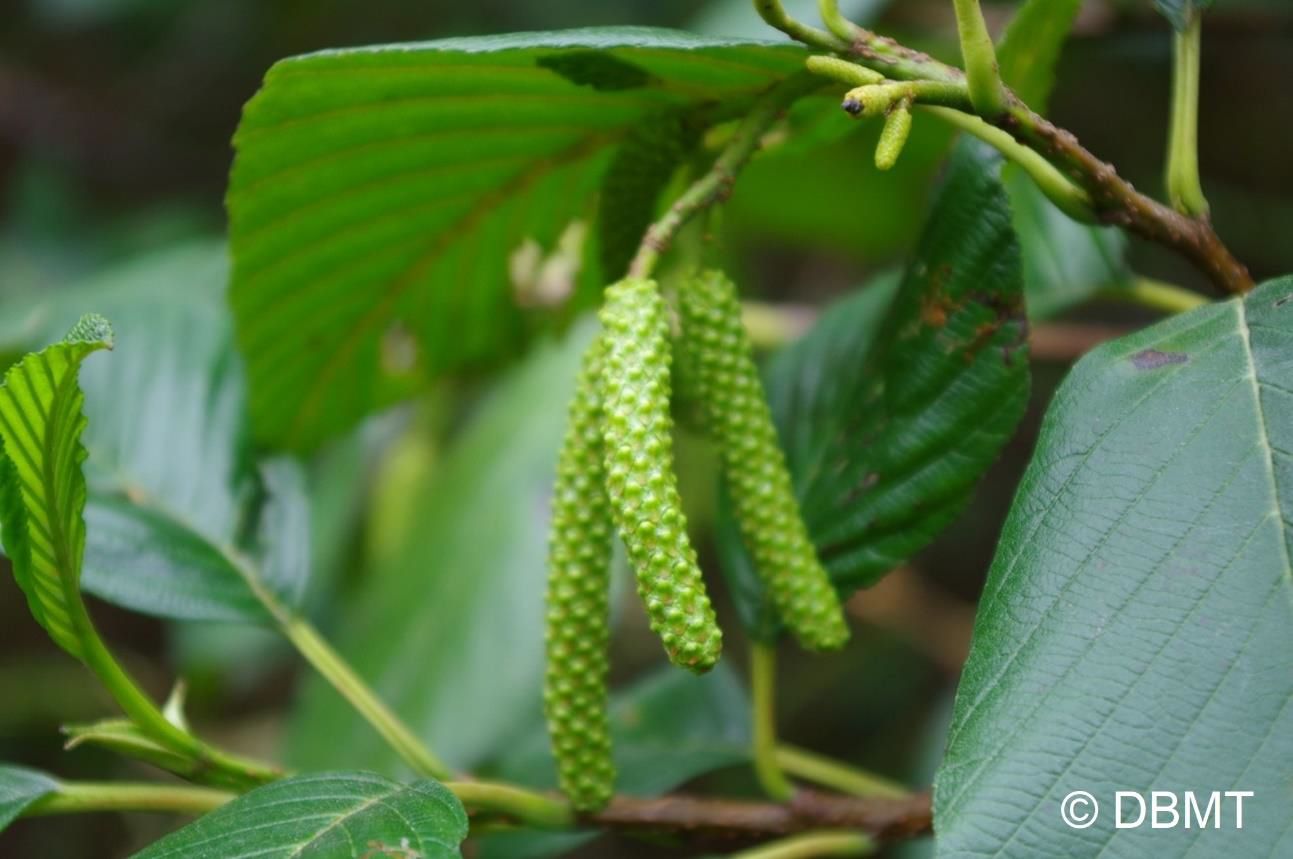
Gardens: El Eden, Shalcapata, Tomasa Farje
Description: Alder (Alnus acuminata), also known as mountain alder, is a tree in the Betulaceae family found in various Andean regions, including Peru. This tree is known for both its medicinal properties and its practical uses in various areas.
Archaeological Perspectives: Alder was one of the most prized woods by ancient Peruvian populations, in part because it is one of the few tree species that grows at high altitudes. Historical documents from Mantaro indicate that it was used for construction and firewood, and pollen studies from Cusco have shown that it was used in agroforestry because it grows quickly and in poor soils. Soil studies from Laguna Pomacochas, north of Chachapoyas, indicate that alder was abundant between 900 and 1300 AD, and it is possible that local people also practiced agroforestry in this region.
Medicinal Properties:
1. Anti-inflammatory: Alder has anti-inflammatory properties and is used in traditional medicine to treat conditions such as muscle pain, arthritis, and other inflammatory diseases.
2. Antibacterial and Antimicrobial: Infusions of the leaves and bark of Alnus acuminata are used to fight bacterial and fungal infections, thanks to their antimicrobial properties.
3. Astringent: Alder is known for its astringent effects, making it useful for treating diarrhea and gastrointestinal problems, helping to reduce intestinal inflammation.
4. Healing: It has been used in the form of ointments or poultices to accelerate the healing of wounds and burns, as its compounds aid in the tissue regeneration process.
5. Antioxidant: The leaves and bark of Alnus acuminata have been shown to contain compounds with antioxidant properties that help reduce oxidative stress in the body.
Non-Medicinal Uses:
1. Wood: Alder wood is light, flexible, and strong. It is used in furniture making, carpentry, and as construction wood for simple structures. In addition, it is excellent for use in carpentry and crafts.
2. Soil improvement: The alder tree has the ability to fix nitrogen in the soil, which improves soil quality in cultivated areas. This characteristic makes it valuable in reforestation and ecological restoration projects, contributing to soil fertilization.
3. Shade and protection for crops: Its rapid growth makes it an excellent tree for providing shade for agricultural crops, especially in high-altitude areas. This helps protect other crops from excessive solar radiation.
4. Erosion control: Due to its extensive root system, the alder is useful for preventing erosion on mountain slopes and unstable areas, helping to stabilize the soil.
5. Ornamental use: In some areas of Peru, the alder is grown as an ornamental tree in parks and gardens due to its attractive foliage and its ability to grow in different soil types.
Considerations: In some areas of Peru, Aliso acuminata is part of the flora used in traditional practices and agroforestry projects, but its use must be managed sustainably to avoid overexploitation, especially of its wood, which can lead to scarcity in some regions.
Referencias:
Brack Egg, A. (1999). Diccionario Enciclopédico de Plantas Útiles del Perú. Centro de Estudios Regionales Andinos "Batolomé de las Casas". Lima, Perú. 556 p.
Bush, M., N. S. Mosblech, and W. Church. 2015. Climate change and the agricultural history of a mid-elevation Andean montane forest. The Holocene: 1-11.
Callupe, F. D. L., & Rodríguez, M. J. M. (2021). Incidence of the attack of insectile agents on the application of two water-retainers on pilot plantations of Alnus acuminata and Eucalyptus globulus in Jauja, Junín, Perú.
Chepstow-Lusty, Alex and Per Jonsson. 2000. Inca agroforestry: lessons from the past. Ambio 29(6):322-328.
Hastorf, C., W. Whitehead, and S. Johanssen. 2005. Late prehistoric wood use in an interandean montane valley. Economic Botany 59(4):337-355.
Saucedo Uriarte, J., Oliva Cruz, S. M., Maicelo Quintana, J. L., Quispe Ccasa, H., & Meléndez Mori, J. B. (2020). Silvopastoral arrangements with tree species Alnus acuminata (alder) and its effect on the environmental factors of livestock systems.
Soukup, J. (1978). Vocabulario de los nombres vulgares de la flora peruana y catálogo de los géneros. Editorial Salesiana. Lima, Perú. 435 p.
Weng C, Bush MB and Chepstow-Lusty AJ (2004a) Holocene changes of Andean alder (Alnus acuminata) in highland Ecuador and Peru. Journal of Quaternary Science 19: 685–691.