Gardens: Jardin Maria, Jardin-Chinchango
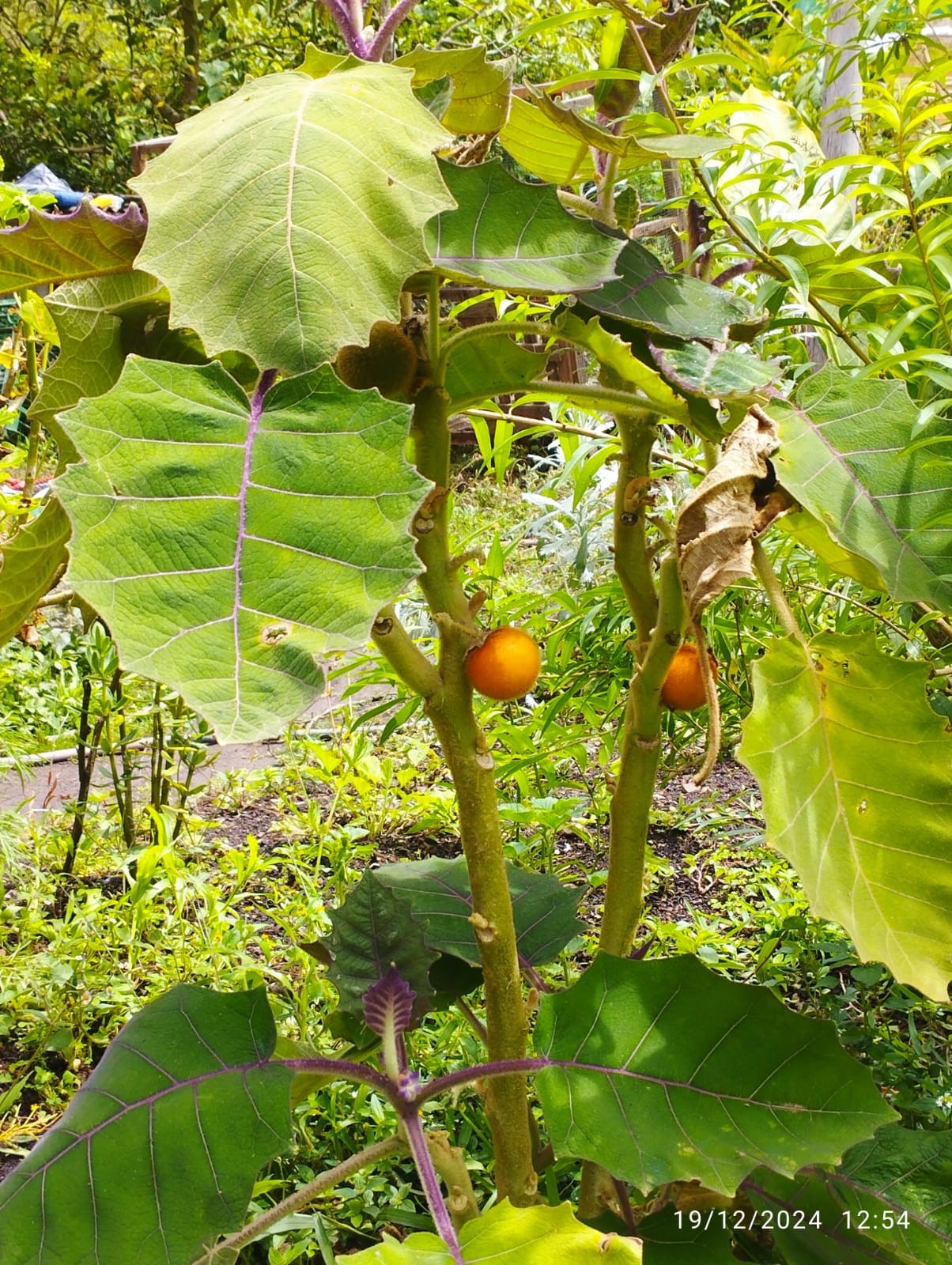
Description: Solanum quitoense, commonly known as chila in the Amazon, lulo, or naranjilla in other parts of Peru, is a plant belonging to the Solanaceae family. Although it is native to the Andean region, especially Colombia and Ecuador, it is also cultivated in Peru, mainly in warm and humid areas of the high jungle.
Solanum quitoense Properties:
Nutritional:
-Rich in vitamins C, A, and B3.
-Contains minerals such as calcium, phosphorus, iron, and potassium.
-Source of dietary fiber.
-Low calorie content.
Antioxidants:
Consuming it promotes digestion due to its high fiber and water content.
Possesses flavonoids and phenolic compounds that help reduce oxidative stress and fight free radicals.
Used in traditional medicine to reduce internal and external inflammation.
Digestive:
It can help relieve mild gastrointestinal problems.
Anti-inflammatory Properties:
Hypotensive and diuretic:
Its components can help reduce blood pressure and improve kidney function.
Uses in Peru:
Food:
-Natural juices and soft drinks.
-Smoothies and ice cream.
-Desserts such as jams, jellies, and nectars.
-Preparation of artisanal liqueurs.
Medicinal:
-Treatments for liver and kidney problems.
-Infusions to relieve throat inflammation.
-Used as a digestive tonic in traditional medicine.
Agricultural and ornamental:
Cultivated as a shade plant and to enhance rural landscapes.
Industrial:
Extracts of its pulp are used in cosmetic products, such as soaps and moisturizers, due to its antioxidant properties.
Considerations: Although it has many benefits, Solanum quitoense contains small amounts of toxic alkaloids in the seeds and peel, so it is generally consumed seedless and with proper processing. In Peru, its cultivation remains limited, but it has been gaining popularity in specialized markets for its exotic flavor and added value in the agroindustry.