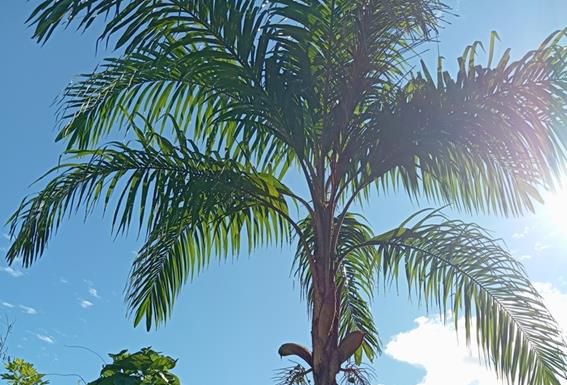
Bactris gasipaes
Jardines: Camino de las Orquídeas
Archaeological Perspectives: Andean civilizations valued chonta wood for its hardness, and it was one of the most important traded goods with the societies of the lowland jungle of eastern Peru. Above all, its wood was used for the manufacture of weapons, including spears and clubs for the Inca army. Several examples of objects made from chonta wood can be seen in the Leymebamba Museum. Traditional Uses: The chonta (or chontaduro) was domesticated in the Amazon several millennia ago and has since been an important part of the culture of the societies in this region. It is still used to make all kinds of tools and is also a staple of the diet of Amazonian communities in many regions of Peru and the Amazon. It can be cooked and eaten, or prepared for its oil; the heart of the tree is also eaten. Medicinal Properties: Bactris gasipaes, commonly known as chonta, is an Amazonian palm tree that has various medicinal properties in the traditions of the communities in the region. The different parts of this plant, such as the fruit, leaves, root, and stem, are used in traditional Amazonian medicine to treat a variety of conditions. Below are some of its most notable medicinal properties 1. Anti-inflammatory and analgesic properties: Infusions and decoctions of the plant's parts are used to relieve muscle and joint pain, as well as to reduce inflammation. The leaves and stem have properties that help reduce pain in arthritis and other inflammatory conditions. 2. Gastrointestinal properties: The chonta fruit is known for its digestive properties. It is traditionally used to treat digestive disorders, such as indigestion, upset stomach, diarrhea, and other gastrointestinal problems. In addition, its consumption has beneficial effects on improving the functioning of the digestive system in general. 3. Antimicrobial properties: Extracts from various parts of the Bactris gasipaes plant have shown antimicrobial properties in some studies, suggesting its potential use in combating bacterial and fungal infections, and can be applied topically to treat wounds and skin infections. 4. Antioxidant Properties: The chonta fruit is rich in antioxidant compounds, which help protect cells from free radical damage and premature aging. These properties make the fruit a popular ingredient in traditional medicine to promote overall health and improve the appearance of the skin. 5. Diuretic Properties: In some Amazonian regions, the plant is used to promote fluid elimination through urine, which can be useful in the treatment of kidney problems or fluid retention. 6. Toning and Energizing Properties: Chonta infusions are also used to increase energy and vitality, and are consumed in cases of fatigue or general weakness. Precautions: Despite its wide traditional applications, more scientific research is needed to confirm and better understand the medicinal effects of Bactris gasipaes. As with other medicinal plants, it is important to use it under the supervision of health professionals.
Referencias:
Brack Egg, A. (1999). Diccionario Enciclopédico de Plantas Útiles del Perú. Centro de Estudios Regionales Andinos "Batolomé de las Casas". Lima, Perú. 556 p.
Clement, C. R. (1988). Domestication of the pejibaye palm (Bactris gasipaes): past and present. Advances in economic botany, 155-174.
Franco, T. S., Potulski, D. C., Viana, L. C., Forville, E., de Andrade, A. S., & de Muniz, G. I. B. (2019). Nanocellulose obtained from residues of peach palm extraction (Bactris gasipaes). Carbohydrate Polymers, 218, 8-19.
Soukup, J. (1978). Vocabulario de los nombres vulgares de la flora peruana y catálogo de los géneros. Editorial Salesiana. Lima, Perú. 435 p.
Yuyama, L. K., Aguiar, J. P., Yuyama, K., Clement, C. R., Macedo, S. H., Fávaro, D. I., & Vannucchi, H. (2003). Chemical composition of the fruit mesocarp of three peach palm (Bactris gasipaes) populations grown in Central Amazonia, Brazil. International Journal of Food Sciences and Nutrition, 54(1), 49-56.