Epidendrum spp.
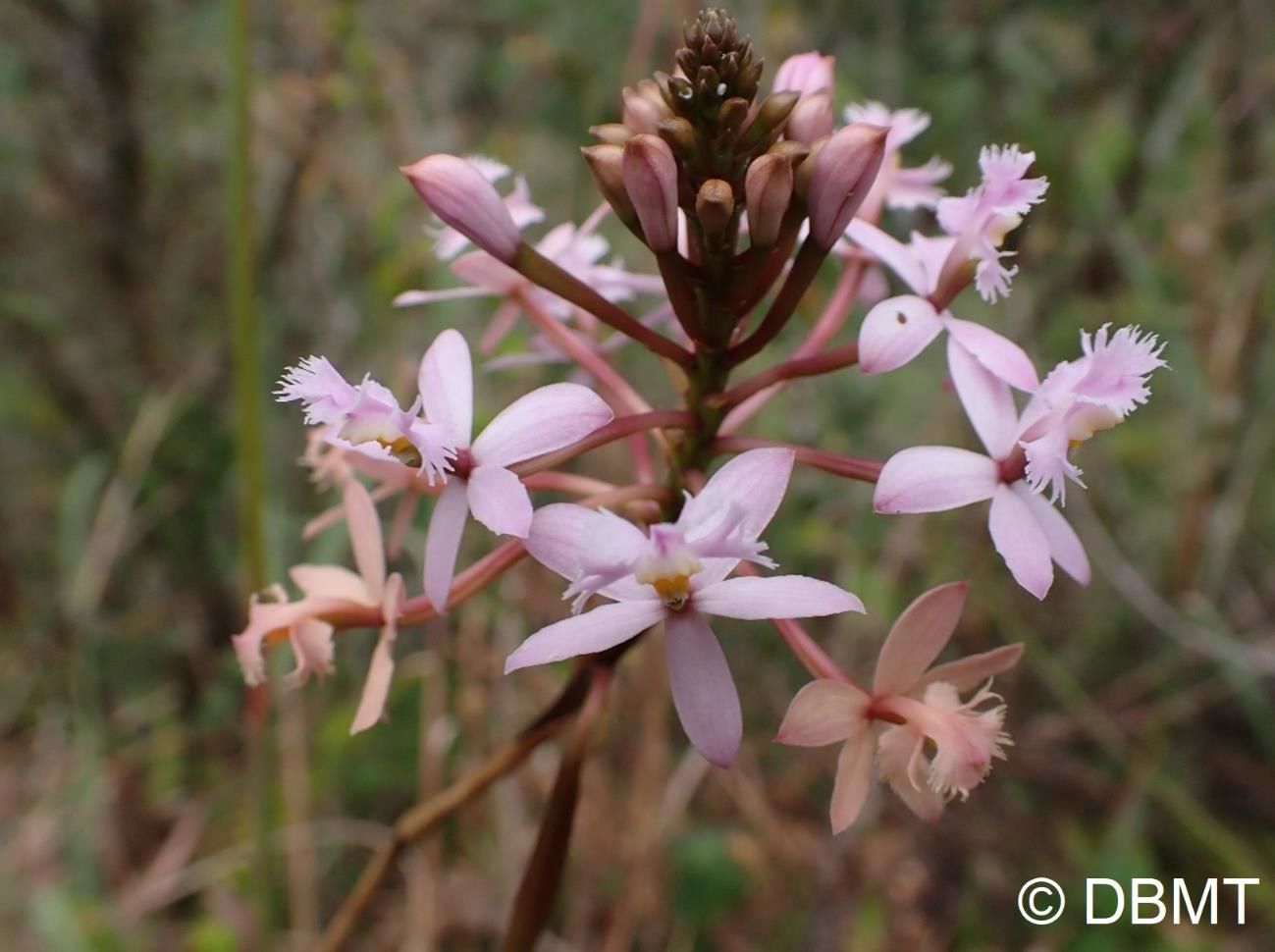
Gardens: El Eden, Sra. Tomasa, Lili and Rodolfo
Traditional Uses in Leymebamba: Heart medicine (pink inguil) (source: Dona Cristina Munoz)
Description: The genus Epidendrum belongs to the Orchidaceae family and is very diverse in the Peruvian Andes, with numerous species growing in diverse ecosystems from cloud forests to highlands. Although its medicinal use is not widely documented for all species, some traditional Peruvian communities have employed certain Epidendrum species for specific purposes.
Medicinal Properties
1. Anti-inflammatory Properties: Some species are used in poultices or infusions to treat external inflammations, such as bruises or swellings.
2. Healing: Macerated leaves or flowers are applied directly to wounds to promote healing.
3. Muscle Pain Reliever: Used in hot baths or compresses to relieve muscle or joint pain.
4. Respiratory tract: In certain regions, Epidendrum infusions are used to treat colds, sore throats, and congestion.
5. Diuretic and depurative use: Infusions prepared from the roots or pseudobulbs are occasionally consumed as a mild diuretic.
Traditional Uses in Peru
Ornamental and Symbolic: In addition to its medicinal properties, Epidendrum is valued for its beautiful flowers, which are used in decorations and ceremonies.
Ritual Practices: In some communities, certain species are considered "protective plants" and are placed in homes or on altars to attract good fortune.
Specific Species: Although uses vary by species, some, such as Epidendrum secundum, are more recognized and may have documented local applications. Additional ethnobotanical research may shed more light on their medicinal potential.
Note: It is always recommended to consult with a local expert or ethnobotanist before using medicinal plants, as misuse can cause adverse effects.
References:
Brack Egg, A. (1999). Diccionario Enciclopédico de Plantas Útiles del Perú. Centro de Estudios Regionales Andinos "Batolomé de las Casas". Lima, Perú. 556 p.
Bussmann, R. W., Malca, G., Glenn, A., Sharon, D., Nilsen, B., Parris, B., & Townesmith, A. (2011). Toxicity of medicinal plants used in traditional medicine in Northern Peru. Journal of ethnopharmacology, 137(1), 121-140.
Bussmann, R. W. (2013). The globalization of traditional medicine in northern peru: from shamanism to molecules. Evidence‐Based Complementary and Alternative Medicine, 2013(1), 291903.
Soukup, J. (1978). Vocabulario de los nombres vulgares de la flora peruana y catálogo de los géneros. Editorial Salesiana. Lima, Perú. 435 p.