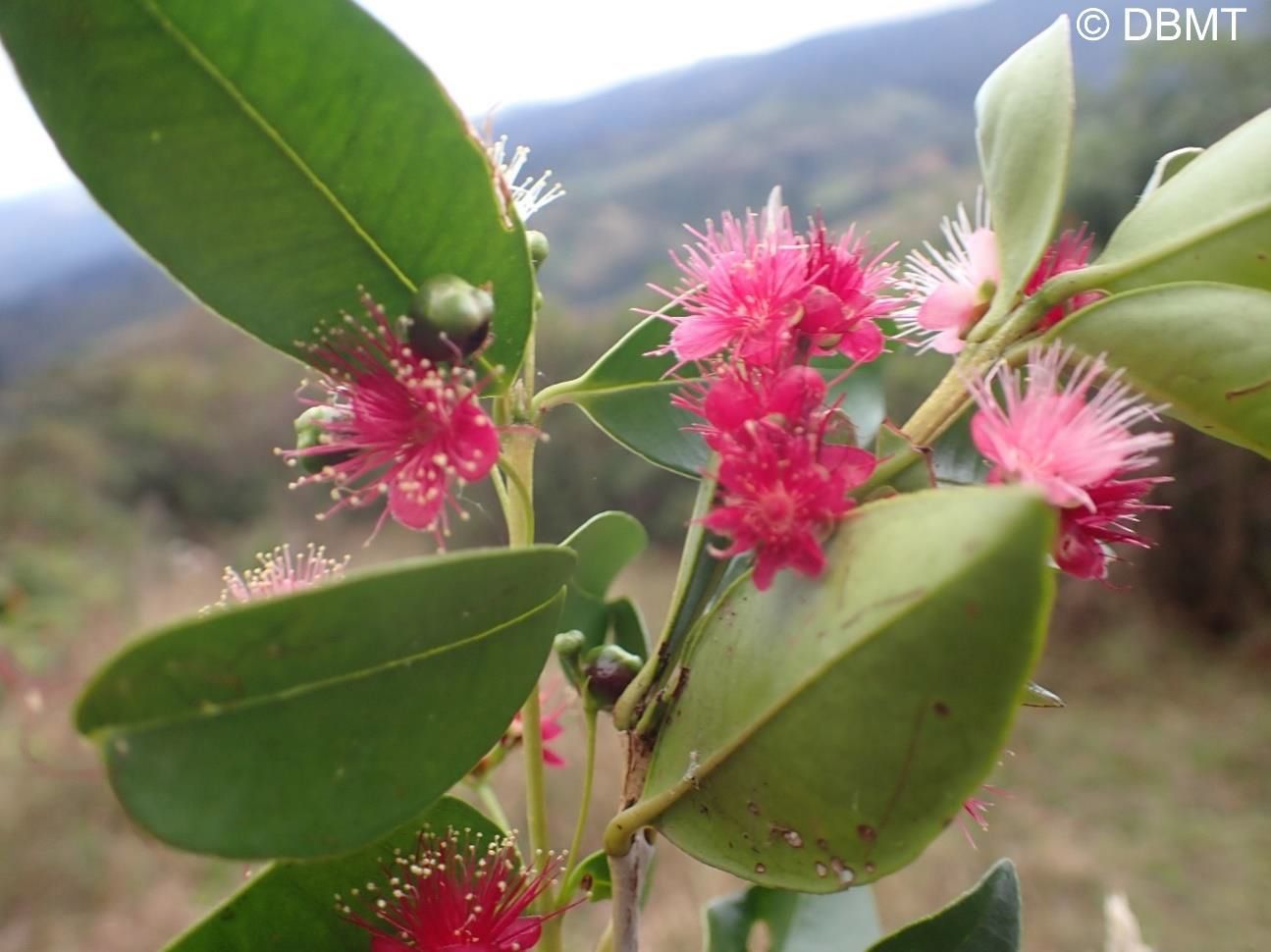
Myrcianthes discolor
Jardines: Shalcapata, Jardin de Sra. Lili y Sr. Rodolfo
Traditional Uses in Leymebamba: Medicinal, produces good firewood (source: Don Jabier Farje) Description: Myrcianthes discolor is a plant belonging to the Myrtaceae family, commonly known in some regions as guayabillo or purple guava. It is found primarily in South America, especially Brazil, and is valued for its medicinal properties in traditional medicine. Although scientific research on its properties is still limited, several uses and benefits have been documented in folk medicine. Medicinal Properties: Myrcianthes discolor is a plant with diverse medicinal properties, primarily anti-inflammatory, antimicrobial, antioxidant, and digestive. Although scientific research on its benefits is still in its early stages, its use in traditional medicine continues to be relevant for treating various conditions. As with many medicinal plants, it is important to use it with caution and under the supervision of a healthcare professional. 1. Anti-inflammatory: Myrcianthes discolor is traditionally used to reduce inflammation in various conditions. The leaves and bark of the plant are applied as an infusion or poultice to treat muscle and joint pain, and even inflammatory skin conditions. 2. Antioxidant: Like many plants in the Myrtaceae family, Myrcianthes discolor contains antioxidant compounds that help neutralize free radicals, protecting cells from damage and contributing to overall well-being. This could have benefits in preventing premature aging and reducing diseases related to oxidative damage. 3. Antimicrobial: The antimicrobial properties of Myrcianthes discolor have been documented, as its extract is believed to inhibit the growth of bacteria and fungi. This makes it useful in the treatment of minor infections and dermatological problems, such as wounds or ulcers, preventing infectious complications. 4. Digestive: It has been traditionally used to relieve digestive problems, such as indigestion, diarrhea, and colic. The leaves or bark are prepared as an infusion to treat these stomach disorders, helping to improve digestion and intestinal function. 5. Antidiabetic: Although research on Myrcianthes discolor is still preliminary, some traditional sources suggest that this plant may have properties that help regulate blood sugar levels. This makes it a possible natural option for the complementary treatment of diabetes. 6. Antiallergic: This plant is believed to have antihistamine properties that may be useful in the treatment of allergic reactions. This may include relief from symptoms such as itching, sneezing, and redness caused by environmental or food allergies 7. Healing: The leaves and bark of Myrcianthes discolor are used externally as natural healing agents. They are believed to help accelerate the healing process of wounds, minor burns, and cuts by promoting cell regeneration. Methods of Use: 1. Infusion: The leaves or bark of the plant are boiled in water to prepare an infusion that can be drunk to relieve digestive or inflammatory disorders. 2. Poultice: The crushed leaves are applied externally to the skin to relieve pain and inflammation and promote wound healing. 3. Extracts: Concentrated extracts of the plant, which can be made from the bark, leaves, or fruits, are used in the preparation of ointments or salves to treat skin conditions. Precautions: Although Myrcianthes discolor is considered safe for traditional use, it is always advisable to consult a healthcare professional before starting use, especially if you have pre-existing conditions or are taking other medications. High doses of extracts or infusions can cause adverse effects, so they should be used in moderation
Referencias:
Brack Egg, A. (1999). Diccionario Enciclopédico de Plantas Útiles del Perú. Centro de Estudios Regionales Andinos "Batolomé de las Casas". Lima, Perú. 556 p.
Bussmann, R. W., Glenn, A., & Sharon, D. (2010). Antibacterial activity of medicinal plants of Northern Peru–can traditional applications provide leads for modern science?.
Picard, G., Valadeau, C., Albán–Castillo, J., Rojas, R., Starr, J. R., Callejas-Posada, R., & Arnason, J. T. (2014). Assessment of in vitro pharmacological effect of Neotropical Piperaceae in GABAergic bioassays in relation to plants traditionally used for folk illness by the Yanesha (Peru). Journal of ethnopharmacology, 155(3), 1500-1507.
Romero, D., Cartuche, L., Valarezo, E., Cumbicus, N., & Morocho, V. (2023). Chemical profiling, anticholinesterase, antioxidant, and antibacterial potential of the essential oil from Myrcianthes discolor (Kunth) McVaugh, an aromatic tree from Southern Ecuador. Antibiotics, 12(4), 677.
Soukup, J. (1978). Vocabulario de los nombres vulgares de la flora peruana y catálogo de los géneros. Editorial Salesiana. Lima, Perú. 435 p.