Piper stomachicum
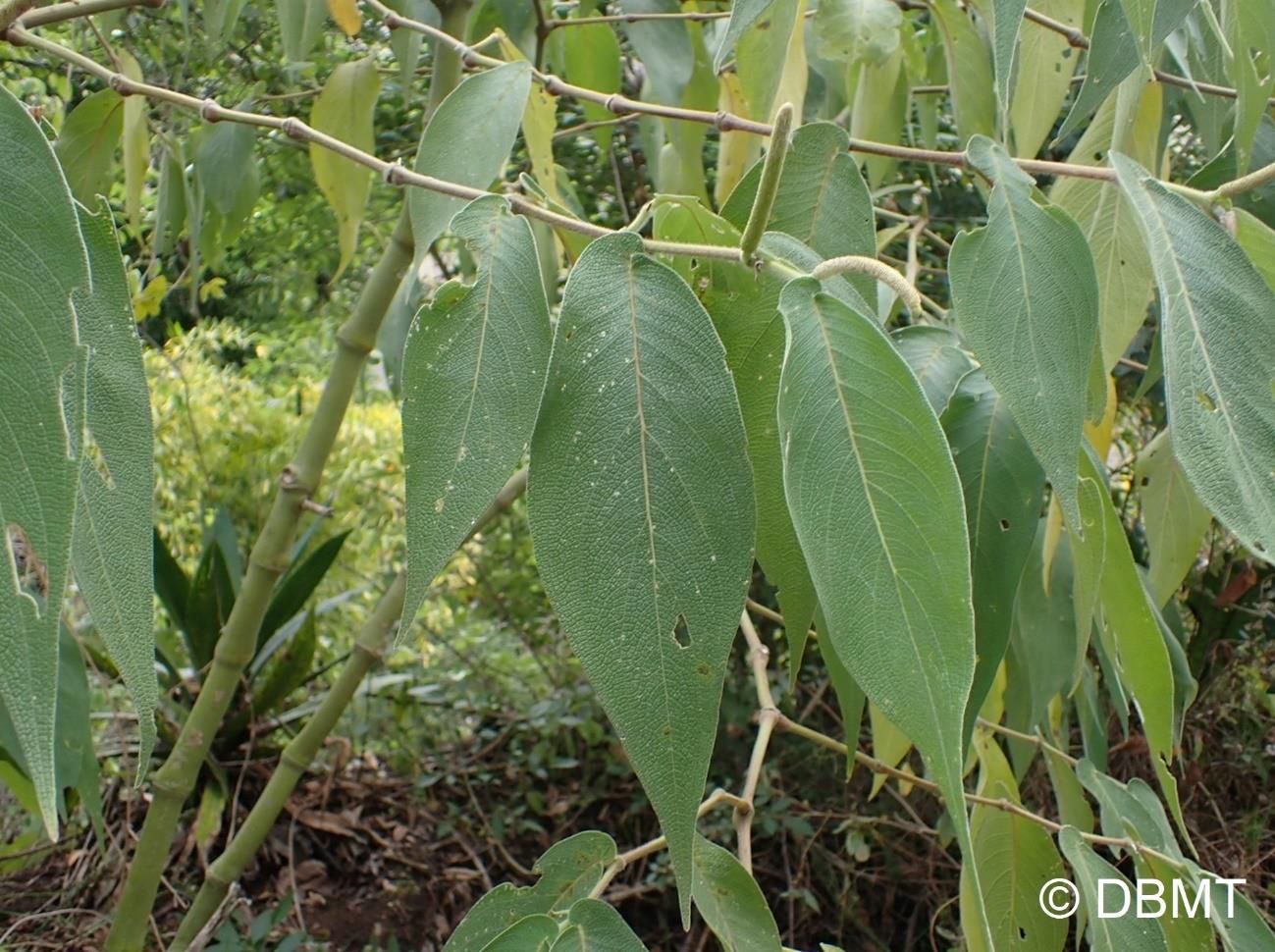
Jardines: La Finca
Description: Piper stomachium, commonly known as "matico," is a plant of the Piperaceae family widely used in traditional medicine in regions of South America, including Peru. The medicinal properties of this plant are attributed to its bioactive compounds, such as alkaloids, flavonoids, tannins, and essential oils. In Leymebamba, two varieties of matico are recognized: macho and hembra. Both are considered varieties of the same plant, although from a taxonomic perspective, they represent two distinct species. The main medicinal properties of Piper stomachium are described below:
Medicinal Properties: Piper stomachium is a versatile plant in traditional medicine, used primarily as a wound healer, anti-inflammatory, and digestive aid. Its wide range of medicinal properties makes it a valuable resource for treating common conditions, particularly in communities where natural medicine is widely practiced.
1. Healing: Piper stomachium is traditionally used to treat wounds and accelerate healing. The leaves are applied directly to injuries or as poultices to reduce inflammation and promote tissue regeneration.
2. Anti-inflammatory: Its bioactive compounds help reduce inflammation in various conditions, such as bumps, bruises, and inflammatory diseases of the digestive or urinary systems.
3. Antiseptic: The plant has antimicrobial properties that make it effective for cleaning and disinfecting wounds, preventing bacterial infections.
4. Astringent: The tannins present in Piper stomachium have an astringent effect, making it useful in the treatment of mild diarrhea and minor bleeding.
5. Digestive and carminative: It is known for relieving stomach problems such as indigestion, flatulence, and abdominal pain. A tea made from the leaves can be helpful in improving digestive function.
6. Decongestant and expectorant: It is used to treat respiratory conditions such as coughs, colds, and bronchitis, helping to clear the airways and relieve congestion.
7. Diuretic: Stimulates kidney function, promoting the elimination of retained fluids and helping to treat urinary tract infections.
8. Hemostatic: It is effective in stopping minor external and internal bleeding, such as nosebleeds or menorrhagia.
Methods of Use
Infusion: The leaves are boiled to prepare teas used primarily for digestive and respiratory conditions.
Poultices: Crushed or paste-shaped leaves are applied to wounds or inflamed areas.
Extracts or oils: More concentrated preparations are used for topical applications or inhalations.
Active Components
Flavonoids: With antioxidant and anti-inflammatory properties.
Essential oils: With antimicrobial and expectorant properties.
Tannins: Astringent and wound healing.
Alkaloids: With analgesic and anti-inflammatory effects.
Precautions
Consumption should be moderate, as excessive doses can cause gastric irritation.
People allergic to Piperaceae should avoid using them without medical supervision
Referencias:
Brack Egg, A. (1999). Diccionario Enciclopédico de Plantas Útiles del Perú. Centro de Estudios Regionales Andinos "Batolomé de las Casas". Lima, Perú. 556 p.
Cuadros-Siguas, C. F., Herrera-Calderon, O., Batiha, G. E. S., Almohmadi, N. H., Aljarba, N. H., Apesteguia-Infantes, J. A., ... & Pari-Olarte, J. B. (2023). Volatile components, antioxidant and phytotoxic activity of the essential oil of Piper acutifolium Ruiz & Pav. from Peru. Molecules, 28(8), 3348.
Soukup, J. (1978). Vocabulario de los nombres vulgares de la flora peruana y catálogo de los géneros. Editorial Salesiana. Lima, Perú. 435 p.