Ruta graveolens / Ruta chalepensis
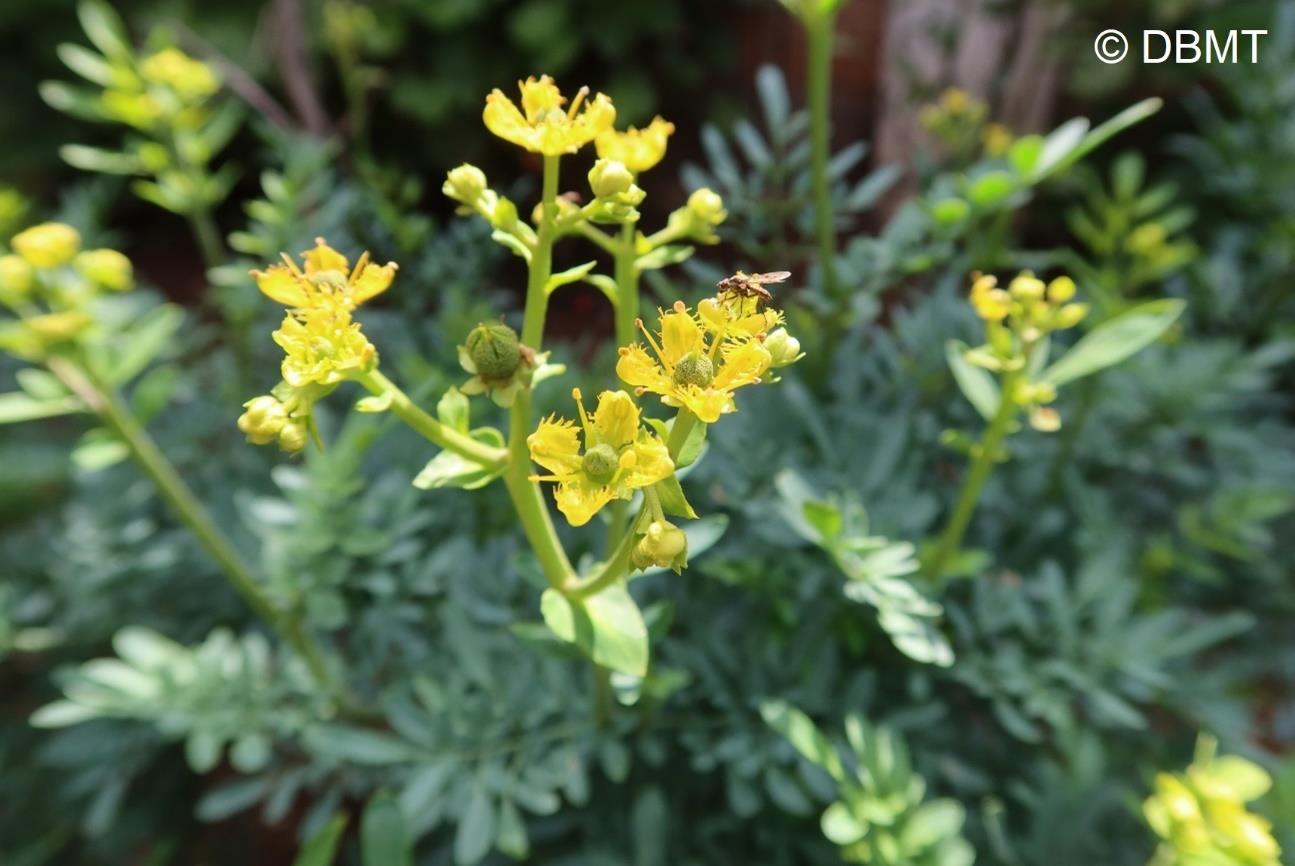
Gardens: El Colibrí, La Finca, Jardin Maria
Medicinal Properties:
1. Digestive and carminative: Helps relieve gastrointestinal problems such as indigestion, flatulence, and stomach cramps.
2. Antispasmodic: Relaxes muscle spasms in both the digestive and uterine systems.
3. Emmenagogue: Stimulates and regulates menstruation, being useful in cases of irregular cycles and dysmenorrhea (painful periods).
4. Analgesic: Reduces muscle and joint pain thanks to its soothing effect. It is used in the form of compresses or poultices.
5. Anti-inflammatory: Its components help reduce external inflammation and treat bumps, bruises, and contusions.
6. Antiparasitic and vermifuge: Combats intestinal parasites thanks to its antimicrobial and antiparasitic properties.
7. Calming and mild sedative: It is used as an infusion to calm nervousness and anxiety and improve sleep.
8. Antiseptic: It helps disinfect minor wounds and prevent skin infections.
9. Vasodilator: It improves blood circulation and relieves symptoms associated with varicose veins and cramps.
10. Natural insect repellent: Its strong aroma acts as an insect and pest repellent in homes and crops.
Uses of Rue in Peru: Rue holds a special place in traditional medicine and cultural practices in various regions of Peru. Its reputation as a medicinal and protective plant makes it a valuable herb for health as well as for spiritual and social traditions. Furthermore, its use as a natural repellent and in agriculture makes it useful in everyday life.
1. Use in Traditional Medicine
Digestive infusion: It is consumed in small amounts to relieve stomach problems such as indigestion, gas, and cramps.
Menstrual regulator: Women drink mild infusions to stimulate menstruation in cases of delayed or irregular menstruation.
Muscle and joint pain: Baths, compresses, or poultices are used with crushed fresh leaves to relieve pain.
Intestinal parasites: It is taken in controlled doses as a natural antiparasitic.
Natural disinfectant: It is applied as a wash to small wounds and bruises.
2. Use in Traditional Culture and Rituals
Rue holds an important place in traditional Peruvian practices as a protective and energy-cleansing plant:
Rue branches are hung on the doors of homes to protect against the evil eye and negative energies.
Rue baths or incense with dried leaves are used to purify environments and people.
In rituals, it is considered a plant of good luck and spiritual protection.
3. Use as an insect repellent: Fresh or dried leaves are placed in homes and warehouses to repel mosquitoes, fleas, and other insects.
4. Use in agriculture: Rue is planted at the edges of orchards as a natural barrier to repel pests and protect crops.
5. Use in natural cosmetics: It is incorporated into relaxing aromatic baths to relieve stress and physical exhaustion.
Using rue
1. Infusion (limited internal use)
Prepared with 1 to 2 fresh leaves in hot water (do not boil) and taken occasionally in small doses for digestive or menstrual problems.
2. Baths or compresses: Boil the leaves and apply them in immersion baths or compresses to treat muscle and joint pain.
3. Incense: Dried leaves are burned in environments to cleanse energies and as an insect repellent.
4. External use: Crushed leaves or its diluted oil are applied to bruises, bumps, or minor inflammations.
Precautions and Contraindications
Rue is toxic in large quantities, and excessive consumption can cause nausea, vomiting, abdominal pain, and liver and kidney damage.
It should not be consumed by pregnant women, as it can cause miscarriages due to its uterine stimulant effect.
Avoid in children and people with kidney or liver problems.
Its essential oil should not be applied directly to the skin, as it can be irritating.
Referencias:
Brack Egg, A. (1999). Diccionario Enciclopédico de Plantas Útiles del Perú. Centro de Estudios Regionales Andinos "Batolomé de las Casas". Lima, Perú. 556 p.
Enrique, B. R. P., Tuesta, A. T., Rebaza, G. A. F., Melo, D. E. C., Gutiérrez, R. L. R., Tantaraico, E. C. S., & Fiestas, G. A. V. (2021). Composición química y caracterización de flavonoides de extractos metanólicos de hojas de dos tipos de Ruta chalepensis L. Revista Peruana de Medicina Integrativa, 5(3), 100-7.
Parray, S. A., Bhat, J. U., Ahmad, G., Jahan, N., Sofi, G., & Ifs, M. (2012). Ruta graveolens: from traditional system of medicine to modern pharmacology: an overview. Am J Pharm Tech Res, 2(2), 239-52.
Soukup, J. (1978). Vocabulario de los nombres vulgares de la flora peruana y catálogo de los géneros. Editorial Salesiana. Lima, Perú. 435 p.